The art form
How black light theatre works
UV light, black fabric and fluorescent paint: why performers in black vanish and painted props float, explained from the theatres' own pages and Wikipedia.
Book the WOW Show ↗Two optical tricks
Black light theatre rests on two simple facts about sight. The first is that the human eye cannot tell a black object from a black background, so anything not lit simply disappears. The second is that ultraviolet light makes fluorescent objects glow: they absorb the UV and send it back out as visible light. Put the two together and a designer can make some things look fully lit while others stay as dark as an empty room.
The black cabinet
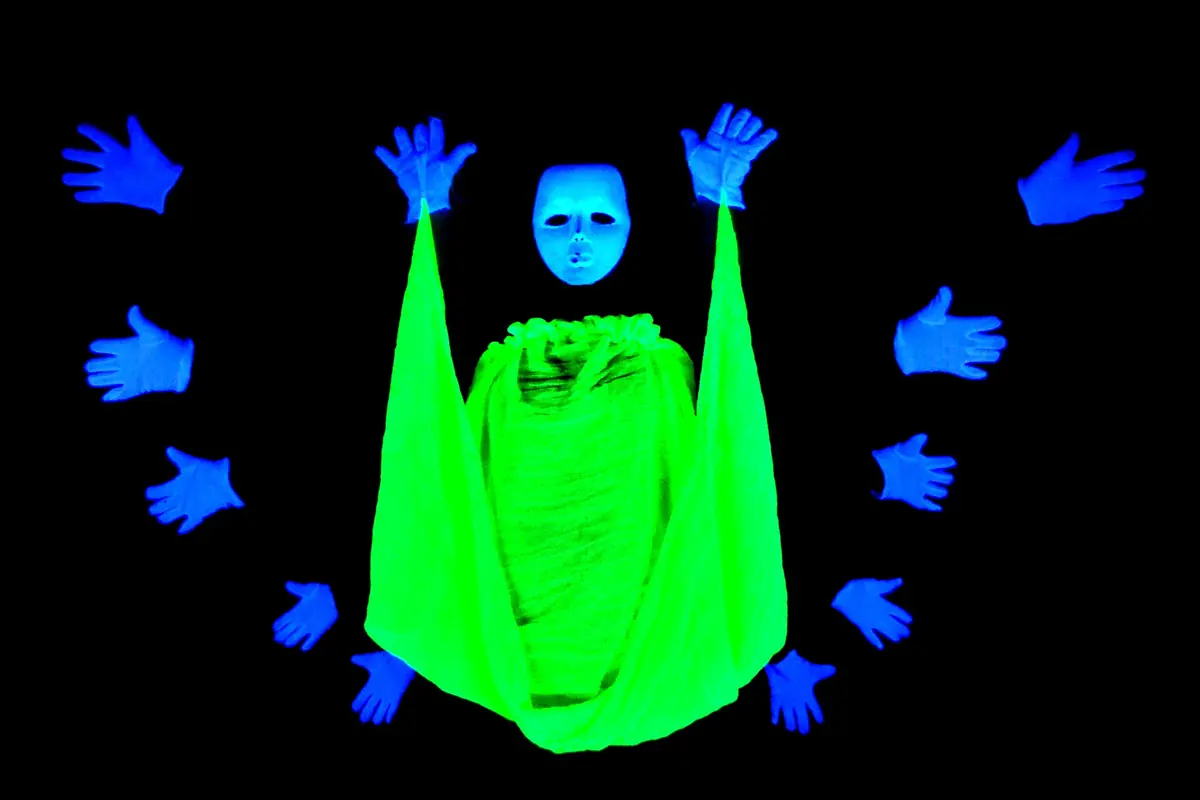
The WOW Show's own site calls the set-up the black cabinet. The performers wear black costumes, black gloves and black masks with openings only for the eyes, and hundreds of metres of black fabric hang behind each of them. They see everything, but the surrounding darkness means no one can see them. The theatre says the whole auditorium has to be completely dark for this to work, and that it has to stay dark for the entire show.
Fluorescent dye does the glowing
Everything the audience is meant to see is painted with fluorescent dye or made from fluorescent material. Under ultraviolet light those objects glow in vivid colour against the dark. UV light itself is invisible to the eye, so the glow looks as though it comes from the objects. Props can take any shape, from a balloon to a costume, and the colours you see come from the paint and fabric rather than from stage lighting.
How a dancer seems to fly
The theatre gives a simple example. A dancer painted in fluorescent dye can appear to fly and levitate, because a performer dressed completely in black is holding her up and cannot be seen. The same logic moves props across the stage. Anything an invisible performer carries looks as if it moves by itself, and a glowing glove can drift through the dark with no arm attached.
Why you rarely see faces
Because the cast hides in the dark, faces are the first thing to vanish. Masks and black hoods keep the performers anonymous, and a face shows only if it is painted or lit on purpose. One guest of the WOW Show wished the faces had been illuminated too. That is a real trade-off of the form: the technique hands you movement, colour and objects in place of expressions.
Why the room stays dark
The theatre calls the effect mighty but fragile, since even one weak ray of light can expose it. That explains the house rules. Cameras aren't allowed at the WOW Show, and you should keep phone screens off once the lights go down. A single bright screen in the audience would show the black cloth and the performers behind the props, and the magic would be gone for everyone nearby.
Where 4D comes in
Many Prague shows add effects to the basic technique. The WOW Show calls itself a 4D production and says it combines the techniques of modern black light theatre with extra effects: giant fluorescent balloons that descend from the ceiling, and snow and rain inside the auditorium. Prague City Tourism describes it as combining traditional techniques with modern theatrical effects. The darkness and the UV light remain the foundation. The 4D part is what makes the show reach into the seats.
What this means for the show you book
A black light show is made of images, not lines. With no dialogue, the cast leans on movement, mime, dance and music, and the audience reads the story from what glows. That is why these shows travel well and suit visitors who don't share a language. It is also why some guests find a plot hard to follow: the scenes work like a sequence of pictures, not a spoken drama.
Sources